- Block diagram
- Design considerations
- Design resources
- Product listing
- Support
Block diagram
Highlighted components are Nexperia focus products.
Battery management system (BMS)
Recommended products (6)
Input power protection
Recommended products (5)
Related applications (1)
Power management
Gate drive circuit
Motor drive (Brushless)
Recommended products (4)
Related applications (2)
Motor drive (Stepper / Brushed)
Recommended products (4)
Signal processing
Communication Interface
Sensor interface
AC/DC
Recommended products (4)
Related applications (2)
Select a component
To view more information about the Nexperia components used in this application, please select a component above or click on a component (highlighted in blue) in the block diagram.
Design considerations
- Charging solutions must support a range of power levels and methods, from plug-in to automated charging, while maintaining high efficiency.
- Battery systems typically operate from 12 V to 72 V, requiring robust battery management, cell balancing and protection to maximize safety, runtime and battery life.
- Power management architectures must efficiently generate multiple voltage rails for motor drives, processors, sensors, cameras and wireless connectivity.
- Navigation systems integrate LiDAR, radar, cameras and proximity sensors, requiring accurate signal conditioning, protection and data processing.
- Motor drives must provide efficient control of traction, steering, lifting and auxiliary functions while meeting thermal, safety and reliability requirements.
- Connectivity spans internal networks and external interfaces, including Ethernet, USB, wireless and cloud communications, requiring robust protection and signal integrity.
- System-level protection and monitoring are essential for managing faults, surges, ESD events and hot-swappable subsystems in demanding industrial environments.
Design resources
Evaluation boards
NX-HB-GAN039-650NBB-BSCUL - 400 V, 3.5 kW GaN FET (bottom-side cooled) half-bridge evaluation board
NEVB-NPS3005B - 0.5-5.5 V, 6 A, 14 mΩ single channel load switch with soft start and quick output discharge (QoD) evaluation board
NEVB-NGD4300GC - 120 V, 4 A half-bridge gate driver evaluation board
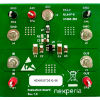
NEVB-NEX91207DE-Q100 - 4-40 V, 70 mA tracking LDO evaluation board
.png)
NEVB-NEX80806DA - 85-264 Vac to 24 Vdc, 1 A flyback converter evaluation board
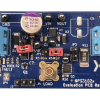
NEVB-NPS3102A - 12 V, 2-13.5 A, 17 mΩ latching eFuse evaluation board
Reference designs
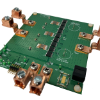
TI PMP23496 8 kW Hotswap
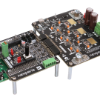.png)
NEVB-MTR1-KIT1 – 1kW, 12-48 V BLDC motor driver kit
Analog Devices EVAL-LTC4286-A1Z Hotswap
Analog Devices EVAL-LTC4287 54 V, 72 A Hotswap