- Block diagram
- Design considerations
- Design resources
- Product listing
- Support
Block diagram
Highlighted components are Nexperia focus products.
Communication Interface
Signal processing
Input power protection
Power management
Gate driver
Power Distribution unit (PDU)
Related applications (1)
Motherboard / AI accelerator board
Related applications (1)
Select a component
To view more information about the Nexperia components used in this application, please select a component above or click on a component (highlighted in blue) in the block diagram.
Design considerations
- Network switches and NICs connect large numbers of high-speed Ethernet ports, requiring scalable architectures that support high bandwidth density and reliable data flow across the system
- Power distribution is typically based on 48 V infrastructure, creating the need for efficient conversion to multiple lower voltage rails for switch ASICs, PHYs and interface components
- Power input protection must address higher voltage levels and system reliability using TVS diodes, eFuses and hot-swap solutions to handle surge events and safe board insertion
- Power management generates tightly regulated local voltage rails for switch processors and supporting components, often with isolated rails and support for Power over Ethernet (PoE) systems
- Hot-swappable modules and line cards require controlled inrush current and fault isolation to maintain system uptime and prevent disturbances during insertion and removal
- High-speed communication interfaces require low-capacitance ESD protection to preserve signal integrity across standards such as Ethernet, while buffers, PHYs and transceivers support long-distance and board-to-board communication
- Signal processing and monitoring functions rely on analog components such as op amps, switches and multiplexers to handle airflow, temperature sensing and system diagnostics
Design resources
Evaluation boards
NEVB-NEX40400EVM-12 - 40 to 5V, 600 mA, PFM, 2.1 MHz, synchronous step-down converter evaluation board
NEVB-NCA9548A_NCA9547 - 8-channel I²C switch and multiplexer evaluation board
NEVB-NEX90530BPA-Q100 - 3-40 V, 300 mA ultra-low Iq LDO evaluation board
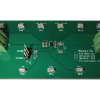
NEVB-NPS4069 - 2.5- 5.5 V, 1.5 A load switch evaluation board
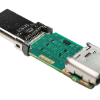
NEVB21-USBC1 - USB Type-C ESD protection evaluation board
Reference designs
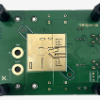
NX-HB-GAN03R2-100CBE-BSC 60V, 350 W GaN bottom-side cooled half-bridge evaluation board
.png)
NEVB-NEX80806DA - 85-264 Vac to 24 Vdc, 1 A flyback converter evaluation board